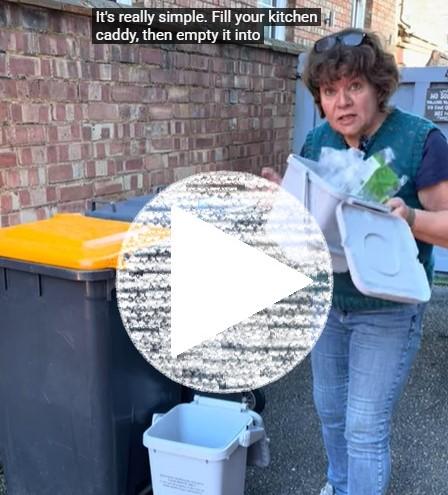
We will be introducing weekly food waste collections for houses and flats in Bedford Borough from Monday 30 March 2026.

This gives every household an easy way to recycle out-of-date food, leftovers and scraps instead of putting them in the black bin. 

By reusing everyday plastic bags and paper to line kitchen caddies, you can keep things clean and simple while helping cut waste, save money and protect the environment.​

Collections will be weekly, so food waste is taken away regularly and does not sit for long periods in your black-lidded bin.

Food waste will be turned into useful products, such as renewable energy and fertiliser, instead of being incinerated or buried in landfill.​

Food caddies will be delivered to all homes by Monday 30 March with instructions of how to use them. Please keep them safe and don’t start using them until a week before your first collection.

Your bin collection day may be changing, we will be posting an update to all affected addresses soon.

Your food waste caddies and how to use them

If you live in a house or bungalow, you will receive two containers: 

  1. A smaller kitchen caddy for indoors.
  2. A larger outdoor food waste bin, similar to arrangements already used in other councils.

The smaller caddy is for day‑to‑day use in the kitchen and should then be emptied into the outdoor bin ready for collection.​

Place your larger food waste bin where you usually leave your other bins by 6am on their collection day for our teams to pick up each week. Be aware that it may be emptied at a different time of day to your other bins.​

If you need a replacement food waste bin or kitchen caddy in future, there will be a way to request it on our website.​

If you live in a flat with your own wheelie bins, you will also receive both these caddies. Your larger caddy should be left at the edge of your property (closest to the highway) by 6am on your collection day and brought back on to your property as soon as possible after collection. 

If you live in a block of flats with shared bins, then you will only receive the smaller caddy for your kitchen. You will then use this to transfer your food waste to the large communal food bin in the bin store, where the other bins that you use for your recycling and waste are kept. 

What you can put in your food waste caddy

Food waste collections are designed to take most everyday food, including items that cannot be composted at home.​

You can put in:

  • raw and cooked food, including plate scrapings, leftovers and peelings
  • meat and fish (including small bones), dairy products, eggs and eggshells
  • bread, rice, pasta, cereals and baked goods
  • tea bags, coffee grounds and solidified cooking oils and fats.
  • pet food (but not pet litter such as bedding or excrement).​
  • out-of-date food eg fruit, vegetables, bread (packaging removed)

Do not put in:

  • packaging, such as tins, bottles, foil or plastic trays (these go in your recycling or general waste bin, depending on material)
  • liquids, such as milk, juice, and hot oils, which can leak and cause spills
  • garden waste, soil, stones, plastic plant pots, which can be taken to the Household Waste Recycling Centre
  • Glass, metal, wood, and cardboard (use the Recycling Locator to find how to recycle these materials)
  • Animal waste and bedding, this goes in your general waste bin

Liners: reusing bags and paper

Unlike many areas that only allow compostable liners or newspaper, Bedford Borough residents can line their kitchen caddies with any plastic bags or newspaper, making the service easy to use and helping to reuse materials that might otherwise be thrown away.​

If you prefer, you don’t have to line your caddie - just give it a rinse after it’s been emptied.

Examples of suitable liners include:

  • empty bread bags
  • empty cereal bags from inside cereal boxes
  • large crisp packets or other large snack bags that can be tied at the top
  • salad, frozen vegetable or other thin food bags
  • old lightweight carrier bags (not heavy “bags for life”, which are better reused for shopping)
  • pedal bin liners or similar thin plastic bags if you already have them
  • newspaper or scrap paper if you prefer a plastic‑free option

Any plastic or paper bag and newspaper is removed at the recycling facility before the food waste is processed. 

Why recycling your food waste matters

Food waste makes up a large share of what is currently thrown away in household rubbish bins, and collecting it separately has delivered big benefits in other areas. Councils elsewhere have seen increases in food recycling of around 20% and significant savings on disposal costs.​

By using your food waste caddy you will help to:

  • cut the amount of waste that is sent and treated at the Energy Recovery site in Stewartby. While this facility generates electricity from the non-recycled waste (black bin), food waste is very wet and is better treated separately in a nearby local specialist facility. Here it can be turned into renewable energy and a nutrient rich fertiliser through processes such as anaerobic digestion. This means your unwanted food helps both power homes and supports agriculture  
  • turn your leftovers into renewable energy and fertiliser, which is used locally, through processes such as anaerobic digestion.
  • reduce the amount of waste going into your black bin, helping to control disposal costs so more of the council’s budget can go towards other local community services.

Every peel, crust and leftover adds up; other areas have shown that small changes in everyday habits can deliver large environmental and financial benefits – families quickly see how much food waste they are creating and how much money it represents.

Food waste collections for commercial premises

Please visit our business waste and recycling webpages for information about waste and recycling services for businesses, including commercial food waste and recycling collections.

Your food waste collection questions answered

About the new service

Why is Bedford Borough introducing food waste collections?

From Wednesday 1 April 2026, councils in England are legally required to provide weekly food waste collections from all households as part of new requirements under the Environment Act 2021. 

Bedford Borough is introducing this service to meet that duty and improve local recycling. Collecting food waste separately helps to recover energy and nutrients from what we throw away.

How is this funded?

The food waste service is government funded, so there are national resources to help us manage the introduction of this service.

Who will receive a food waste collection?

All households in Bedford Borough will receive food waste collections from Monday 30 March. 

What type and size of containers will I receive?

You will receive:

  • a small 7 litre (22x23cm at the top and 20cm deep) kitchen food caddy for your kitchen
  • a 23-litre outdoor food waste bin (35x35cm at the top and 45cm deep), collected weekly

Some flats will only receive the small kitchen caddy. Food waste from flats may be collected using a communal food waste bin (a small silver-lidded wheelie bin) or a nearby food waste collection point.

Why haven’t I received my food waste caddy yet?

Food waste caddies are being sent out right through to the end of March. If several of your neighbours have received their caddy and you think you’ve been missed, please report this to us online.

When can I start using my food waste caddies?

You can start using your caddies a week before the collection service begins on Monday 30 March 2026. 

On your collection day, place your outdoor food waste bin where you normally leave your bins by 6am, and return it to your property as soon as possible after collection.

How will food waste collections work if I live in a flat?

If you live in a flat, you will receive a small kitchen caddy.

How you dispose of food waste will depend on your property:

  • Some flats will have their own larger outdoor food waste bin and a weekly roadside collection.
  • Others will use a communal food waste bin, found in the bin store.
  • Some will use a nearby food waste collection point.

Details of food waste collection points will be sent to those flats who need to use one before the service starts on Monday 30 March.

Do I have to take part?

Residents are strongly encouraged to participate, as evidence from other councils shows that making use of the service delivers environmental benefits and cost savings for the whole community. 

What if I don’t have time?

Keeping your kitchen caddy near to where you prepare food makes it really easy to drop in any food waste. Alternatively, some prefer to keep it on or near to the bin where you currently put your food waste. Others prefer to keep it near the kitchen sink, so leftovers can be scraped off before plates are washed. 

People in other areas have found it becomes second nature within a few weeks, especially as food waste is collected weekly rather than sitting in your general waste bin.

What if I don’t produce enough food waste to make this worthwhile?

Many people are surprised by how much food waste they produce once they start using a caddy. Small items like banana skins, tea bags, bread crusts and eggshells soon add up.

We encourage you to try the service for a couple of months to see how easily it fits into your routine.

I compost food or feed it to my pets or wild birds, why do I need a caddy?

It’s great that you are already reduce food waste in this way. The food waste collection service is useful for items that:

  • aren’t suitable for home composting (such as cooked food, meat, dairy)
  • aren’t safe for pets (such as grapes, chocolate, spoiled and mouldy food)

Only certain foods are safe for birds, and unsuitable food can harm wildlife or attract pests, visit the RSPCA website for more information.

You can continue composting, feeding pets and wild birds where appropriate and use the food waste caddy for everything else.

I have a food waste disposal unit in my sink – do I still need to use the food waste caddy?

Food waste disposals are designed to handle small amounts of soft food. Putting the wrong items into them can cause damage, blockages, and costly repairs.

Foods that can damage a waste disposal include:

  • cooked food and leftovers
  • meat, fish and bones
  • coffee grounds and tea bags
  • fibrous foods such as vegetable peelings, celery and sweetcorn husks
  • solidified fats and greasy food

These items can safely go in your food waste caddy instead.

Using the food waste caddy helps protect your disposal unit, reduces the risk of blocked pipes, and ensures your food waste is recycled into renewable energy and nutrient-rich digestate. 

You can still use your sink disposal for suitable items, but the food waste caddy is the best option for anything that could cause damage.

I use the assisted collection service, will food waste bins be included in this?

Yes, your outdoor food waste bin will be collected in the same way as your other bins.

If you are unable to move your bins to the roadside for collection because of a disability or medical condition you may be eligible for an assisted collection. Learn more about this service on the assisted collection webpage.


Using your food waste caddies

Can I leave out just the small kitchen caddy for collection?

No. Only the larger outdoor food waste bin will be collected by our crews. The small caddy is for use inside the home only, to collect scraps and other food waste before emptying into the larger bin. 

Can I use something else instead of the small kitchen caddy?

Yes. You can use any container you prefer to collect food waste indoors - for example, reuse an old ice cream tub or other food container, or purchase something with a lid that suits your needs. 

There is a wide range of shapes and sizes of internal food waste caddies available on the market if you need something different.

Please keep the council-provided caddy, as it may be useful in the future if your circumstances change.

Can I have a second caddy?

Only one of each caddy type (the small kitchen caddy and the large outdoor food bin) will be provided per household, flats with communal food waste collections will only receive the small kitchen caddy.

If you are finding that your food caddy is filling up quickly, this may be a good opportunity to explore ways to reduce food waste. 

Some simple ways to reduce food waste:

  • Planning meals and shopping with a list.
  • Storing food properly to extend its life (for example, making good use of your fridge and freezer).
  • Using leftovers creatively.
  • Understanding food date labels to avoid unnecessary waste.

Visit Love Food Hate Waste for more advice on reducing food waste.

Can I leave extra waste next to my outdoor food waste bin?

 No. All food waste must be placed in the outdoor food waste bin for collection.

How can I reduce the amount of food waste I produce?

If you want to reduce your food waste , and the amount you are spending on food that gets thrown away, head to Love Food Hate Waste for tips and inspiration: www.lovefoodhatewaste.com

What if I do not want the caddies?

Government guidance for England says councils must offer every household a food waste collection and provide appropriate containers to do so. 

If you do not plan to use the service right away, you should keep your caddies somewhere safe, so they are available if your circumstances change in future.​

What you can and can’t put in

What food can go in the caddy?

You can include:

  • raw and cooked food, including plate scrapings, leftovers and peelings
  • meat, fish and small bones (any that fit in the kitchen caddy)
  • dairy products
  • eggs and egg-shells
  • bread, rice, pasta, cereals and baked goods
  • fruit and vegetables
  • tea leaves, tea bags and coffee grounds
  • leftovers and plate scrapings
  • pet food (but not pet litter, such as bedding or excrement)
  • solidified cooking oils/fats
  • out of date food (remove from packaging if it’s not a plastic bag that can be seen through)

Should out-of-date food/salad in plastic bags be removed before putting in the food waste bin?

Where possible, remove packaging before placing food in the caddy.

If food is loose inside a plastic bag that can be seen through, with no other packaging, it can still be collected. All bags are removed during processing.

What about large fruit stones like peach or avocado stones?

Large stones (such as avocado or peach stones) don’t break down easily. Please avoid adding them where possible, if a fruit stone goes in by accident, bins will still be collected.

What happens if I put the wrong items in the food caddy?

If incorrect items are found, the bin may not be collected. A tag will be left explaining why and what needs to change for the next collection.

Why can’t I put food waste in my green-lidded bin?

Your green-lidded bin is for garden waste only, such as grass cuttings, leaves, and small branches.

Garden waste is treated using a process called windrow composting, which is designed for plant material. Food waste cannot go into this process because it:

  • Attracts pests if composted in the open air
  • Produces strong odours
  • Does not break down safely or effectively in windrow composting

Food waste needs to be treated in a sealed system at higher temperatures, which is why it is collected separately and processed using anaerobic digestion. This allows food waste to be safely turned into renewable energy and a nutrient-rich digestate.

To keep both recycling processes working properly, please put:

  • Garden waste in your green-lidded bin
  • Food waste in your food waste caddy

Check what can go into each of your bins

Liners, bags and cleaning

Is it really OK to use plastic bags as a caddy liner?

Yes. Bedford Borough’s system will follow the model used successfully by councils such as West Northamptonshire, Devon and West Oxfordshire, where any plastic or paper bag can be used to line the caddy. 

At the processing plant, bags are removed by the contractor before the food waste is treated, so the bags are not composted, but the food can still be recycled into energy and fertiliser.

What are the best bags to reuse?

Reusing bags you already have is best for the environment. Good options include:

  • bread bags
  • salad, vegetable, or cereal bags
  • frozen food packaging
  • thin carrier or pedal bin liners

Do food waste liners need to be tied?

They do not need to be and it can help keep your outdoor food waste bin cleaner if you do. If you do tie them, please use a knot or clear tape.

What if my liner splits or leaks?

If your liner splits, you can carefully tip the contents of your internal caddy into your outdoor food waste bin, or another liner if you prefer, and then put the damaged bag in your black bin. 

Can I use compostable liners instead?

Yes, but there is no environmental advantage. Compostable liners are also removed during processing as they do not break down quickly enough for anaerobic digestion.

This means both plastic and compostable liners end up being handled in the same way after sorting.

Where can I buy caddy liners?

Caddy liners are available from lots of places including Bedford Market, local shops, most major supermarkets, and online.

How do I clean my caddies?

You can give your caddies a quick rinse with water if they need a clean, although using a liner will reduce the need for this.

Storage, smells and pests

Won’t this make my kitchen smell?

Using a small, lidded caddy indoors and emptying it regularly into your outdoor food waste bin for a weekly collection, will keep smells to a minimum. Both have a lid that can be secured shut by moving the handle down to the front of the caddy or bin, again, reducing the chance of smells getting out.

Residents in other areas report that separating food waste actually makes their kitchen and household waste wheelie bins less smelly

Will this attract pests, rats and foxes?

Experience from other areas in the country shows that using a robust outdoor food waste bin with a secure lid and locking handle helps to deter animals. Placing the bin out for collection on the correct day and not overfilling it will further reduce any risk of pests or spillage.​ 

As your food caddy will be collected weekly, rather than with the fortnightly general waste as before, this will reduce the time the food sits in your bin, also reducing the potential for smells that attract pests.

Collections and environmental impact

How often will my food waste be collected, and from where?

Food waste collections will be made each week. 

On your collection day, place your outdoor food waste bin where you normally leave your bins by 6am, and return it to your property as soon as possible after collection. Bringing your caddy in after collection is especially important in windy weather to prevent damage or loss.

Updated collection calendars will be available on our website before the service starts, so you can quickly check your collection day.

How will my food waste bin be emptied on collection day?

On collection day, our crew will empty your outdoor food waste bin by tipping it into a larger wheelie bin they bring with the vehicle as they move along your street. 

When the food waste in this larger bin reaches a given level, it is emptied mechanically into the back of the collection lorry using a lifting system. 

This means food waste is handled safely and efficiently before being taken for recycling.

Can I put my house number on my outdoor food waste bin?

Yes, you can add a house number to make your bin easier to identify.

What happens to the food waste after it is collected?

In line with other UK councils, Bedford Borough’s collected food waste will be sent to a specialist facility where it can be turned into renewable energy and a nutrient‑rich fertiliser through processes such as anaerobic digestion. This means your unwanted food helps power homes and support agriculture instead of being incinerated.​

Anaerobic digestion is a process that uses microorganisms to break down food waste in the absence of oxygen, inside an enclosed system. As it breaks down it gives off methane, which is collected and converted into biogas and used to generate electricity, heat or transport fuels. It also creates a nutrient-rich digestate that can be used as a fertiliser for agriculture and in land regeneration.

How are plastic bags removed before the food waste is treated?

Food waste collected in Bedford Borough is treated using special machines at Biogen’s facility. These machines spin to pull the food away from the packaging. The heavy food is separated from the lighter packaging at the very start, and most packaging is removed straight away.

After the food is treated, the leftover material, called digestate, is checked again. Anything bigger than 2mm, such as small bits of plastic or packaging, is taken out.

All digestate produced meets PAS110 standards. These are the highest quality rules set by the government to make sure the material is safe to spread on farmland. The operator regularly tests the digestate to check it is clean and safe. Only digestate that passes these strict checks is used on fields.

The separated materials - including any plastic bags - are then sent to local disposal facilities through Biogen’s partnership with Veolia.

What happens to the removed plastics and packaging?

The separated materials are transferred to approved waste treatment facilities. Biogen currently sends this material to Veolia’s treatment facility at Ling Hall, Warwickshire, but it is actively seeking to divert more of it to energy recovery facilities wherever possible. 

What about the impact on the environment of running additional weekly collections?

The environmental impact has been carefully assessed. Carbon modelling of this type of collection shows that although extra collections do create emissions, these are outweighed by the benefits of recycling food waste into energy and nutrient-rich digestate, reducing overall carbon emissions.

Subscribe to email bulletins

You can subscribe to email bulletins for bin collection updates and recycling tips

Subscribe