
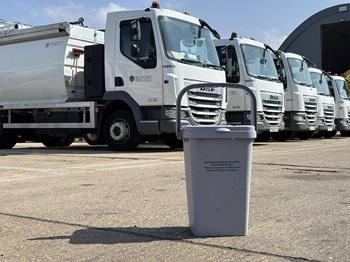
Bedford Borough residents have diverted over 1,400 tonnes of food waste from their black bins in the first three months of the new weekly service. That’s 86.8 tCO2e (tonnes of carbon dioxide equivalent) removed from household waste through anaerobic digestion. Bedford Borough Council is marking the third month of its weekly food waste collection service, with residents recycling 516 tonnes of food waste in June alone, showing continued growth across the borough.
Since the service launched at the end of March, residents have recycled 1,418 tonnes of food waste, helping to reduce the amount of food waste going into black bins. All food waste collected is sent for anaerobic digestion at a local Biogen facility, where it is turned into renewable energy for the National Grid and a nutrient-rich fertiliser for local farms.
While the vast majority of collections have been completed as planned, the Council recognises there have been some issues during the rollout, not helped by recent heatwaves. Where a round has not been completed on the scheduled day, crews have returned the next working day to finish the route.
Separately, the waste team has been reviewing addresses which have reported missed collections on multiple occasions to improve performance. This has allowed them to identify patterns, review training and check information passed to new crews. The Council thanks residents for reporting these issues and for their understanding as the service is implemented.
Councillor Nicola Gribble, Portfolio Holder for Environment, said, “It’s fantastic to see residents continuing to use the food waste collection service in such strong numbers. Thank you to everyone for taking part and helping to make this service a success.
“We know there have been some challenges as the service has been introduced, particularly during the recent hot weather, and we are grateful for residents’ patience and understanding as our teams work to resolve issues and keep improving the service.”
Residents who can compost at home are encouraged to do so for suitable items such as fruit and vegetable peelings, while the weekly food waste collection is available for those who can’t and for items unsuitable for home composting such as cooked food, meat and dairy.
The team also encourage people to visit the Love Food Hate Waste Website to find tips and advice on lowering the amount of food waste produced and how to save money by buying only what they need.
Crews have asked residents to remember not to place the kitchen caddy inside the outdoor food waste bin on collection day, and not to use black bin liners for food waste. Clean cereal or bread bags, or suitable liners from shops can be used if preferred. They also remind residents to leave their food bin next to their wheelie bin for collection.
To reduce flies in any bin during warm weather, keep lids closed, store bins out of direct sunlight where possible, wrap food waste before placing it in the food bin and rinse containers regularly.
Small changes to food and waste habits are making a big difference by cutting waste, supporting recycling and generating renewable energy for the borough. For more information about food waste collections, what can be recycled and how to report a missed bin, visit Bedford Borough Council’s household bins and recycling pages at www.bedford.gov.uk/BinsAndRecycling