
Food waste caddies and outdoor food waste bins

Accepted items
- raw and cooked food, including plate scrapings, leftovers and peelings
- meat and fish (including small bones), dairy products, eggs and eggshells
- bread, rice, pasta, cereals and baked goods
- tea bags, coffee grounds and solidified cooking oils and fats
- pet food (but not pet litter, such as bedding or excrement)
- out-of-date food eg fruit, vegetables, bread (packaging removed)
Non-accepted items
- packaging, such as tins, bottles, foil or plastic trays (these go in your recycling or general waste bin, depending on material)
- liquids, such as milk, juice, and hot oils, which can leak and cause spills
- garden waste, soil, stones, plastic plant pots, which can be taken to the Household Waste Recycling Centre
- glass, metal, wood, and cardboard find how to recycle these materials using the recycling locator tool further down this page
- animal waste and bedding, this goes in your general waste bin
Orange lid bins - mixed recycling
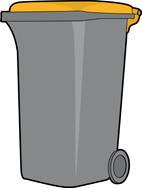
Accepted items
- Paper and cardboard
- Metal packaging (tins, cans, foil and aerosols)
- Plastic food and drink packaging (bottles, pots, tubs and trays only)
- TetraPak cartons
- Glass bottles and jars
If an item is not listed under accepted items, the bin may be rejected due to contamination.
How to present your recycling for collection
- Please rinse any items with food or drink residue and put recycling loose in your orange lidded bin.
- Squash and crush items to save space. This helps you fit more recycling in your bin and helps our crews.
- Flatten cardboard boxes before putting them in your bin. Boxes which are not collapsed can take up a lot of useful space.
- Do not present recycling in black or opaque sacks. These will not be collected and may result in your bin being left due to contamination.
- We do not currently accept flexible or soft plastics (such as film lids and wrap) or hard plastics (such as toys and garden furniture).
Have extra recycling?
If your bin is full, you can put extra recycling out next to it on your recycling collection day:
- Use a clear or white transparent bag all year round.
- If you prefer, use a cardboard box during drier periods only. In wet weather or rain, please only use a clear or white transparent bag.
Large cardboard boxes must be flat packed. Please prioritise glass in your bin rather than in your extra recycling.
Wet cardboard cannot be recycled. If cardboard is wet, keep it back and put it out on your next recycling collection when it is dry. If it cannot be kept dry, it will need to go in your black bin.
If you have large quantities of recycling, you can take it to the Household Waste Recycling Centre.
Use the Recycle Now Recycling Locator below to check whether an item can be recycled at home or to find your nearest recycling point.
Green lid bin - garden waste
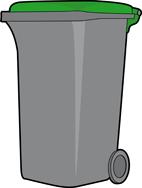
Accepted items
- Grass, plants and weeds.
- Flowers, prunings and hedge clippings.
- Leaves and bark.
Non-accepted items
- Soil, sand and rubble.
- Large tree branches or stumps.
- Food waste (vegetable peelings, kitchen waste, pet food).
- Carnivorous/omnivorous animal/pet bedding and waste.
- General non-recyclable or recyclable waste.
- Invasive or hazardous plants (Ragwort, Japanese Knotweed, Spear Thistle, Creeping Thistle, Broad Leaf Dock, Curled Dock etc).
- Fake plants
Please note, the list of non-accepted items is not exhaustive. If an item is not listed under accepted materials, the bin may be rejected due to contamination.
Alternatively you may wish to consider purchasing a home composter or take your garden waste to a household waste recycling centre.
Black lid bin - non recyclables
Any excess waste put out for collection in black bags (or similar) will not be collected.
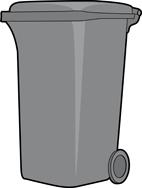
Accepted items
- Plastic film, cling wrap, and crisp packets
- Polystyrene packaging and trays
- Nappies and sanitary products
- Used tissues and kitchen roll
- Pet waste and litter
- Vacuum cleaner contents, dust and bags
- Soiled or greasy paper and food containers
- Non-recyclable packaging (eg laminated pouches)
Non-accepted items
- Bulky/large items (furniture, cabinets, luggage etc)
- Vapes
- Uncontained liquid waste
- Commercial/business waste
- Tyres
- Electrical Equipment (WEEE)
- Paint
- Soil, sand, rubble
- Building materials (wood, bricks, metals etc)
- Recycling (put this in your orange lid bin)
- Asbestos or plasterboard
Please note, the list of non-accepted items is not exhaustive. If an item is not listed under accepted materials, the bin may be rejected due to contamination
Many items can be taken to the Household Waste Recycling Centre on Barkers Lane.
If you have clinical waste such as diabetic sharps, this must be disposed of using our specialist clinical and hazardous collection service.
Battery recycling
Most retailers that sell batteries are legally required to provide free collection points in-store, typically located near the tills or customer service desks.
As part of our commitment to improving recycling rates, we also collect used household batteries at the kerbside.
Accepted batteries: 6V, D, C, AA, AAA, 9V, button.
To recycle your batteries from home you must:
- Place your used batteries in a small, clear plastic bag and seal it once full.
- On your usual collection day, put the sealed bag on top of your black bin or orange lid recycling bin, or sacks.
Please do not place batteries inside any bin. Only standard household batteries are accepted as part of this scheme. We cannot collect any other types of batteries than those listed.
Waste and recycling policy statements
Our waste and recycling policies (PDF) set out our approach to the collection of waste within Bedford Borough. This policy is being updated to due to recent changes to collections.
Subscribe to email bulletins
You can subscribe to email bulletins for bin collection updates and recycling tips.