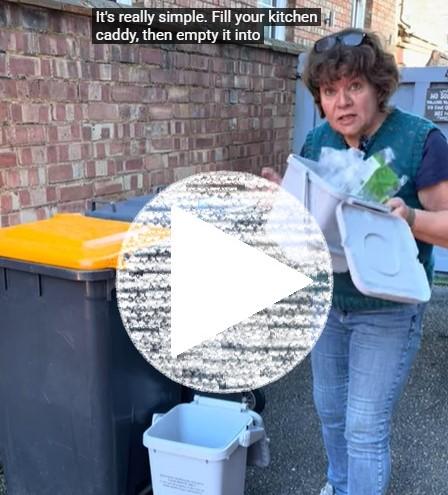
We introduced weekly food waste collections for houses and flats from Monday 30 March. This gives every household an easy way to recycle out-of-date food, leftovers and scraps instead of putting them in the black bin.
By reusing everyday plastic bags and paper to line kitchen caddies, you can keep things clean and simple while helping cut waste, save money and protect the environment.
Collections are weekly, so food waste is taken away regularly and does not sit for long periods in your black-lidded bin.
Food waste will be turned into useful products, such as renewable energy and fertiliser, instead of being incinerated or buried in landfill.
Your food waste caddies and how to use them
If you live in a house or bungalow, you will have two containers:
- A smaller kitchen caddy for indoors.
- A larger outdoor food waste bin, similar to arrangements already used in other councils.
The smaller caddy is for day‑to‑day use in the kitchen and should then be emptied into the outdoor bin ready for collection.
Place your larger food waste bin where you usually leave your other bins by 6am on their collection day for our teams to pick up each week. Be aware that it may be emptied at a different time of day to your other bins.
If you need a replacement food waste bin or kitchen caddy in future, you can request one via our Replace damaged or missing bins and food caddies page.
If you live in a flat with your own wheelie bins, you will also have both these caddies. Your larger outdoor food waste bin should be left at the edge of your property (closest to the highway) by 6am on your collection day and brought back on to your property as soon as possible after collection.
If you live in a block of flats with shared bins, then you will only have the smaller caddy for your kitchen. You will then use this to transfer your food waste to the large communal food bin in the bin store, where the other bins that you use for your recycling and waste are kept, or an external collection point nearby.
What you can put in your food waste caddy and outdoor food waste bin
Food waste collections are designed to take most everyday food, including items that cannot be composted at home.
You can put in:
- raw and cooked food, including plate scrapings, leftovers and peelings
- meat and fish (including small bones), dairy products, eggs and eggshells
- bread, rice, pasta, cereals and baked goods
- tea bags, coffee grounds and solidified cooking oils and fats.
- pet food (but not pet litter such as bedding or excrement).
- out-of-date food eg fruit, vegetables, bread (packaging removed)
Do not put in:
- packaging, such as tins, bottles, foil or plastic trays (these go in your recycling or general waste bin, depending on material)
- liquids, such as milk, juice, and hot oils, which can leak and cause spills
- garden waste, soil, stones, plastic plant pots, which can be taken to the Household Waste Recycling Centre
- Glass, metal, wood, and cardboard (use the Recycling Locator to find how to recycle these materials)
- Animal waste and bedding, this goes in your general waste bin
Liners: reusing bags and paper
Unlike many areas that only allow compostable liners or newspaper, Bedford Borough residents can line their kitchen caddies with any plastic bags or newspaper, making the service easy to use and helping to reuse materials that might otherwise be thrown away.
If you prefer, you don’t have to line your caddie - just give it a rinse after it’s been emptied.
Examples of suitable liners include:
- empty bread bags
- empty cereal bags from inside cereal boxes
- large crisp packets or other large snack bags that can be tied at the top
- salad, frozen vegetable or other thin food bags
- old lightweight carrier bags (not heavy “bags for life”, which are better reused for shopping)
- pedal bin liners or similar thin plastic bags if you already have them
- newspaper or scrap paper if you prefer a plastic‑free option
Any plastic or paper bag and newspaper is removed at the recycling facility before the food waste is processed.
Why recycling your food waste matters
Food waste makes up a large share of what is currently thrown away in household rubbish bins, and collecting it separately has delivered big benefits in other areas. Councils elsewhere have seen increases in food recycling of around 20% and significant savings on disposal costs.
By using your food waste caddy and outdoor food waste bin you will help to:
- cut the amount of waste that is sent and treated at the Energy Recovery site in Stewartby. While this facility generates electricity from the non-recycled waste (black bin), food waste is very wet and is better treated separately in a nearby local specialist facility. Here it can be turned into renewable energy and a nutrient rich fertiliser through processes such as anaerobic digestion. This means your unwanted food helps both power homes and supports agriculture
- turn your leftovers into renewable energy and fertiliser, which is used locally, through processes such as anaerobic digestion.
- reduce the amount of waste going into your black bin, helping to control disposal costs so more of the council’s budget can go towards other local community services.
Every peel, crust and leftover adds up; other areas have shown that small changes in everyday habits can deliver large environmental and financial benefits – families quickly see how much food waste they are creating and how much money it represents.
Food waste collections for commercial premises
Please visit our business waste and recycling webpages for information about waste and recycling services for businesses, including commercial food waste and recycling collections.
Your food waste collection questions answered